How to Choose the Right Bag Filling Solution for Your Manufacturing Process
On this page Introduction Why selecting the right bag filling solution matters ? Types of…
Read More →

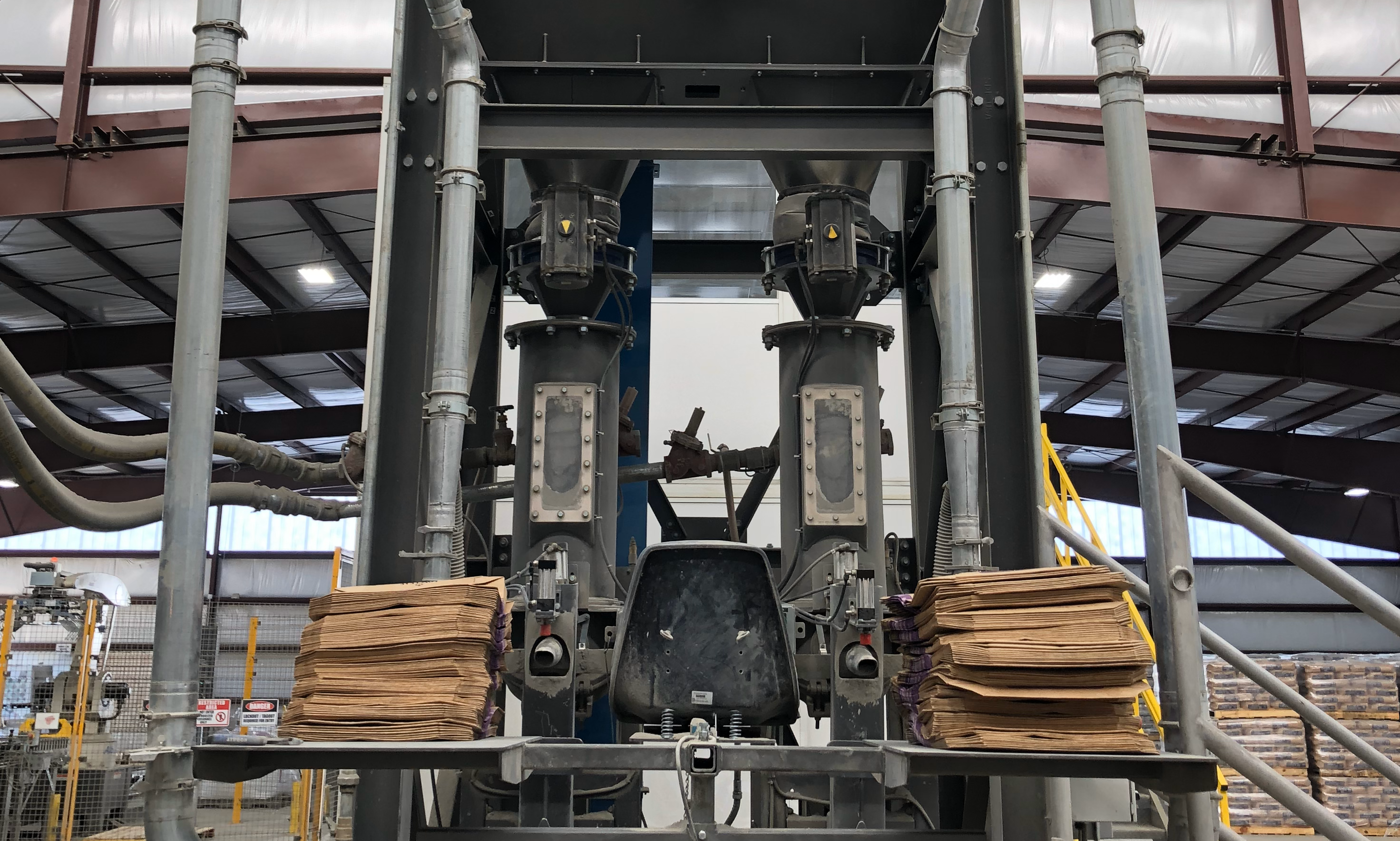
Selecting the proper bag filling machine is much more than just comparing the specifications of the equipment. Manufacturers need to know how their products will behave, what bag formats they will be using, and how the filling equipment will slot into their production operations.
The choice of equipment for facilities handling powders, granules, pellets and other dry bulk materials depends on such factors as material flow, filling accuracy, production capacity and automation requirements. What works well for one product might not be right for another.
Columbia PSI helps manufacturers assess these requirements and find bag-filling solutions that fit their packaging processes, operational priorities, and plans for future production.
The selection of appropriate equipment not only influences the filling operation. Packaging line effectiveness is affected by material handling, operator involvement, packaging consistency, maintenance, and downstream equipment performance.
Challenging a mismatched system may include irregular material flow, too much product giveaway, frequent adjustments, and capacity issues.
Manufacturers can assess the application prior to buying equipment to discover these challenges and develop realistic performance requirements. The idea is that you choose equipment that helps the entire operation, not just one piece of equipment.
Different industrial bag filling systems are designed to work with specific bag formats, materials, and production requirements. Common types include bulk bags, open mouth, and valve bag fillers.
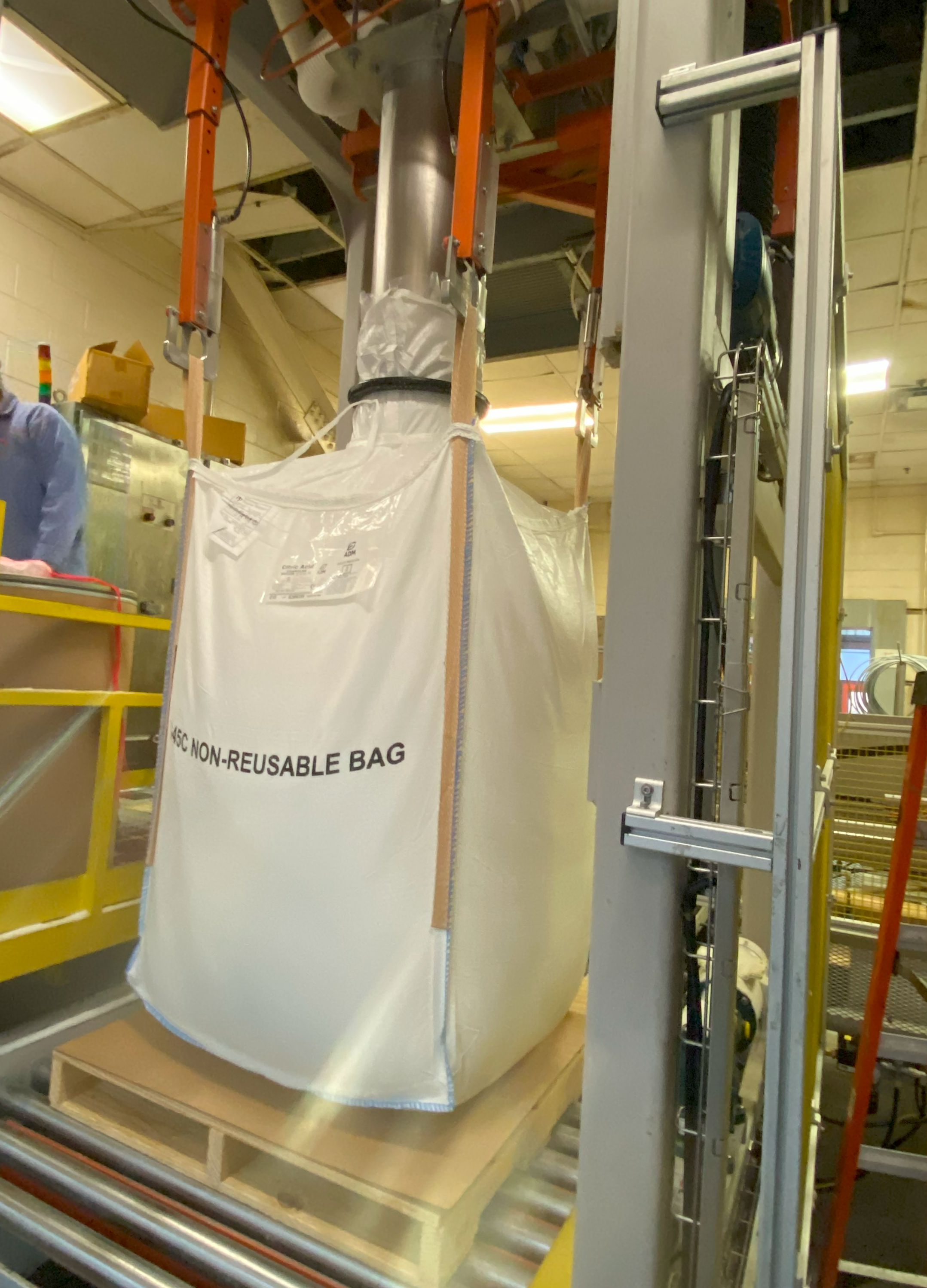
Bulk bag fillers fill dry bulk materials into flexible intermediate bulk containers (FIBCs), or bulk bags.
The design of the FIBC bag filler needs to consider the required fill weight, bag dimensions, material flow characteristics, and handling arrangements.
Manufacturers should consider bag support, feeding methods, dust containment and removal and transport of filled bags. These factors affect equipment configuration and operating requirements.
Open mouth bag fillers fill product into pre-made bags via an open top. They can be used for suitable powders, granules, pellets, and other dry products.
Open-mouth bag fillers can require operator intervention and are available in varying degrees of automation, depending on the application.
The bag dimensions, target weight, filling method, and closing requirements should be considered together to select the right configuration.
Valve bag fillers insert material through a valve opening incorporated in the bag. They are normally used for suitable powder and granular products.
Material flow, dust generation, aeration, and filling accuracy can affect equipment configuration.
Manufacturers should also consider bag construction, the rate of production required, and downstream handling process prior to making a choice of a valve filling system.
The selection of the appropriate bag filling equipment is based on an assessment of the material, packaging format, production requirements, and operating environment together.
Filling performance is directly related to material behaviour.
Free-flowing pellets may require different feeding methods than fine powders that create dust, hold air or bridge within equipment. Bulk density, particle size, moisture sensitivity, and product consistency can also affect filling and weight control.
Manufacturers should evaluate these characteristics under realistic operating conditions. Product testing can be useful when the material behaviour is not well known or when an application involves difficult flow properties.
Understanding the material will help in selecting the correct feeding methods, dust control measures, and equipment set-up.
The choice of equipment is determined by the bag size, construction, closing method, desired fill weight, and weight tolerance.
Changeover requirements and adjustment ranges should be considered for facilities with more than one product or bag size. Different formats may need changes in equipment or components.
Consistent filling can help reduce product giveaway, reduce underweight packages, and aid predictable downstream handling.
Manufacturers should establish average and peak bags per hour of requirements, operating schedules, and expected growth in production.
Filler capacity must also be considered in conjunction with upstream material supply and downstream equipment speed. A high-capacity machine is of little value if some other process constrains the overall throughput.
Space available should allow for material feed and utilities, operator access, maintenance clearance and connections to other equipment.
Bag filling machines should be compatible with the entire packaging process.
Upstream feeding and conveying affect material availability and downstream bag closing, inspection, conveyors, palletizers and stretch wrappers affect finished-bag movement.
Manufacturers should compare equipment capacities, controls, conveyor arrangements and layout requirements before installation.
For facilities considering end-of-line automation, Columbia PSI’s palletizing solutions offer relevant options to evaluate in conjunction with filling equipment.
North American manufacturers should factor in the availability of labor, workplace safety, equipment reliability and long-term technical support.
Maintenance requirements include routine cleaning, inspection, calibration, and replacement of wear components.
Having cleaning points and service areas can make routine maintenance easier. Check availability of spare parts, preventive maintenance procedures, and technical assistance.
Consideration should be given to ceiling height, utilities, conveyor elevations and compatibility with existing equipment for retrofit projects in the early stages.
These considerations help manufacturers understand long-term operating requirements for different equipment configurations.
Industrial packaging automation can help manufacturers meet labor needs, repetitive handling tasks, and packaging-line synchronization.
Depending on the application, automated equipment can provide more consistent bag handling, less manual intervention, and better coordination with downstream processes.
Automatic bag filler automates more steps in filling and handling process while semi-automatic equipment requires some operator interaction in certain steps.
Automation can also provide access to features like recipe management, production monitoring, and automated adjustments depending on the equipment capabilities.
However, more automation doesn’t automatically mean better results. Before deciding on the right level, the manufacturers must consider the production volume, product characteristics, labor requirements, maintenance resources, and integration requirements.
Columbia PSI’s approach to bag filling applications is to look at the full packaging process, not individual machines.
The assessment starts with a review of the product including its flow properties, bulk density, dust generation, and fill requirements.
Bag styles, target weights, output rates, floor space availability, and operator input are also taken into account.
Columbia PSI also helps manufacturers evaluate how bagging systems need to interface with material feeding, bag closing, conveying, inspection, palletizing and stretch wrapping equipment in addition to the filler.
This application-focused approach identifies potential capacity mismatches, layout constraints, and integration requirements prior to finalization of equipment decisions.
Columbia PSI matches current operating conditions with future production requirements to help manufacturers discover equipment configurations and integrated packaging solutions that meet their needs.
Each packaging application has different requirements. Discuss materials, bag formats, production targets and packaging line issues with Columbia PSI. Give Columbia PSI a call about bag filling solutions for your operation.
The right bag filling machine isn't always the highest rated capacity equipment. It is the system that satisfies the material-handling, packaging, throughput, and operational requirements of the application.
Assessing product characteristics, filling accuracy, automation, maintenance and packaging-line integration together leads to more informed equipment decisions.
An application-oriented approach enables manufacturers to choose equipment that satisfies the current production requirements but also allows for changes in the operations in the future.
Each packaging application has different requirements. Discuss materials, bag formats, production targets and packaging line issues with Columbia PSI. Give Columbia PSI a call about bag filling solutions for your operation.